

Elnathan John
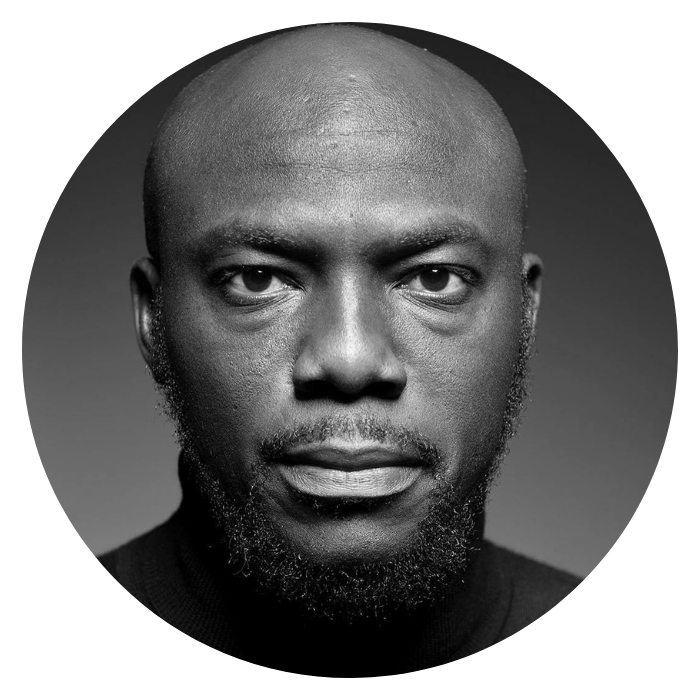 Elnathan John
Short Bio
Elnathan John is a Berlin-based writer, researcher, editor, and literary and communications consultant, with a background as a lawyer in Nigeria. Over more than a decade he has built a body of work spanning satire and literary fiction, literature in translation, religious movements old and new, Islamic history in the Sahel and West Africa, masculinities and sexuality, and precolonial and colonial studies.
His books include Born on a Tuesday (shortlisted for the Betty Trask Award and the Hurston/Wright Legacy Award, longlisted for the Nigeria Prize for Literature), On Ajayi Crowther Street, and Be(com)ing Nigerian — A Guide. His essays and journalism have appeared in The New York Times, The Economist, Le Monde Diplomatique, Transition, and The Hopkins Review, among others. He has held fellowships including the Civitella Ranieri Fellowship and the Miles Morland Scholarship for African Writers, was selected in 2019 as a recipient of the Berlin Senate’s Arbeitsstipendium für nichtdeutschsprachige Literatur, and served as a juror for the Booker International Prize. Alongside his writing, John teaches creative writing in Berlin and has led workshops, seminars, and lectures at universities including Humboldt, Bayreuth, Bonn, Frankfurt, Yale, Leiden, Vienna, Innsbruck, Düsseldorf, the Free University Berlin, Hamburg, and NYU, on topics ranging from masculinities and media to satire and postcolonial memory.
His current research and artistic project, What the Spirits Could Not Say: Translation, Silence, and the Grammar of Bori, examines Bori, a spirit possession tradition of northern Nigeria, as a system of orature shaped and silenced by successive regimes of translation — colonial, missionary, reformist, and academic. The project extends more than fifteen years of independent research into Bori cosmology and builds on his recent essay on breath, survival, and spirit grammar. Combining creative writing, critical reflection, and performance, it culminates in a cycle of spirit-voiced short texts, a public reading or lecture-performance at Bayreuth Academy, and a companion workshop for doctoral and early-career researchers, Translating the Untranslatable. It is developed in collaboration with Prof. Clarissa Vierke.
Selected Publications
- John, Elnathan. Born on a Tuesday. Abuja: Cassava Republic Press, 2015; New York: Grove Atlantic, 2016; London: Cassava Republic Press UK, 2016. Translated as Lagos, Leben in Suburbia (Heidelberg: Wunderhorn Verlag, 2017) and Né un mardi (Paris: Éditions Métailié, 2018; winner, Prix Les Afriques 2019).
- John, Elnathan. “Can We Dance? Thoughts on Decolonisation.” ZAM Nelson Mandela Lecture. Amsterdam: ZAM Magazine, March 2020.
- John, Elnathan. “Bei den Fulbe in Nigeria” [“The Fulani in Nigeria”]. Le Monde Diplomatique (German edition), May 2017.
- John, Elnathan. “In a Time of Boko Haram.” The Chimurenga Chronic, March 2015.
- John, Elnathan. “Keepers of Secrets.” In Safe House: Explorations in Creative Nonfiction, edited by Ellah Wakatama Allfrey. London: Cassava Republic Press / Commonwealth Foundation, 2016.
Project Description
What the Spirits Could Not Say: Translation, Silence, and the Grammar of Bori
This artist-research project examines Bori spirit possession, a tradition of northern Nigeria, as a linguistic, literary, and performative system reshaped by successive acts of translation. Colonial ethnographers, missionaries, Islamic reformists, and postcolonial elites have rendered Bori as superstition, madness, or moral excess, producing silences that persist in how the practice is perceived and remembered today. The project treats Bori as orature: meaning carried through chant, invocation, rhythm, breath, movement, costume, and spirit-voiced speech. Iska, breath or wind, anchors this inquiry. In Bori, spirits arrive, speak, and depart through breath, yet breath drops out of colonial and reformist accounts almost entirely, exposing translation’s habit of erasing what resists discipline.
Creative writing, critical reflection, and performance form the project’s method. A cycle of short texts, provisionally titled Things the Spirits Meant to Say, gives voice to spirits, healers, and possessed bodies in the first person, moving between fiction, ethnography, and poetic testimony. Brief reflections accompany each piece, tracing the translation choices and ethical limits behind it. The residency culminates in a public reading or lecture-performance at Bayreuth Academy, pairing spirit-voiced texts with reflections on memory and silence. A companion workshop, Translating the Untranslatable, invites doctoral candidates and early-career researchers to translate ritual, trauma, and embodied knowledge into language, building reflexivity around loss and responsibility.
Developed in collaboration with Prof. Clarissa Vierke, the project positions creative practice as a mode of knowledge production, re-voicing what colonial and postcolonial translation regimes worked to silence.